
Variable Setup in Board Games: Explained

Variable setup appears near the top used mechanic of board games on boardgamegeek.com Variable setup is exactly how it sounds, every time you start a new game the game is different somehow. I know that there can be a barrier to entry with the jargon people use to describe games. So as part of what I do with Bert’s Tabletop Games I want to reduce that barrier to entry by explaining it in plain language though my series call The Game Mechanics.
What is Variable Setup?
Variable setup comes in a lot of flavors. The massive game Twilight Imperium and the popular game Catan where the boards are changed every game are played on a series of hexagonal tiles. In Ticket to Ride players get different goals each game. Other games use more unique variability like 7 Wonders: Dual where the draw pile is setup in unique configurations each game.
There is a reason this is one of the most used mechanics in board games.
Why create a game with variable setup? Variable setup creates a unique experience for each game adding to replay value of the game without adding complexity. This keeps people interested in the game and coming back to play it over and over. This also gives players agency in the game before the first turn even takes place. Choosing a faction, drafting starting cards, or revealing a randomized map creates anticipation
There is a reason this is one of the most used mechanics in board games.
Catan: Case Study
Catan is a classic in the board game hobby, it was released in 1995 and still holds the hearts of gamers today. In 2015, the publisher made the decision to drop 'Settlers' from the title. The reason? It was about being more inclusive. The term 'settler' can be problematic due to its historical context, especially when we think about colonization and its impacts. So, 'Settlers of Catan' became simply, Catan.

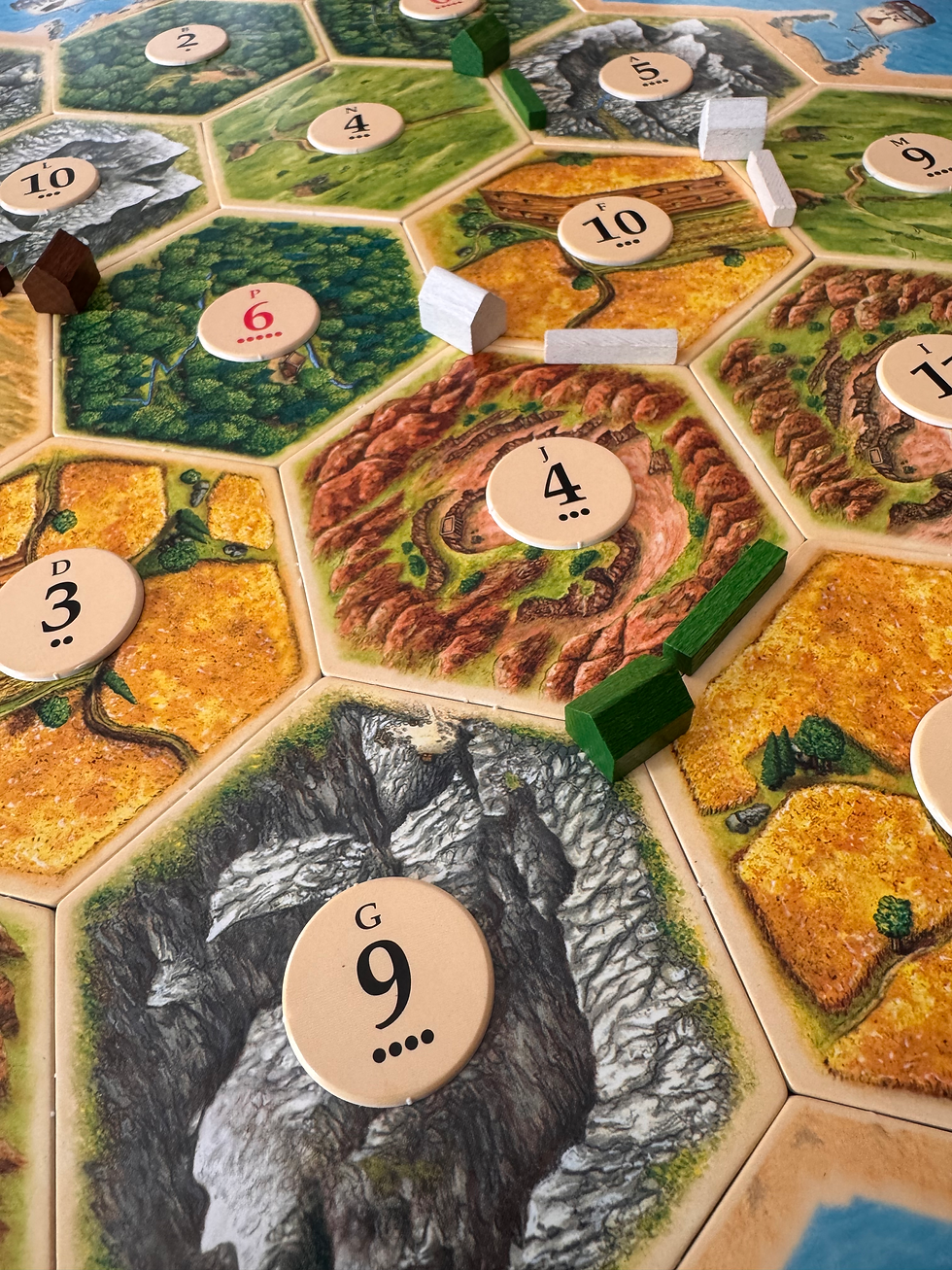
Catan is played on a series of 19 hexagonal tiles laid out in a large hexagon. The tiles represent the resources that are used in the game to build improvements. These are shuffled and laid out to create the playing area. The act of shuffling the tiles is what gives Catan its variable setup. If the tiles were laid out the same way every time then players would learn what places are the best starting spots. This stops the initial placement of the game from being learned.
In addition to the hex tiles being random players can also choose to randomize the numbered (2-12) tokens that get placed on the tiles. During the game players roll 2 six sided dice and if there is a town or city token on the tile then they get the resource the tile represents. So this is a second layer of variability that's added to the the setup of Catan With these two levels no game is going to be the same.
This is one of the reasons Catan has stood the test of time.
The last part of the setup of Catan is the players choosing where they want their initial towns to be. This isn't choice is done in a common draft method first player then second then third then fourth. The second round is the opposite starting with the fourth player. This is the first time the player get a chance to interact with the variable setup in Catan. each player evaluates where the tiles are what they are connected to and the chance that the number on the tile is going to be rolled.
As you can see variable setup can take several forms and is a great way to have players coming back to play the game. This prevent players from "solving" the game by allowing them to play the same scenario over and over finding the most efficient method of playing the game. This also shields newer players from other players who know that efficiency, providing them with a good game experience. This is one of the reasons Catan has stood the test of time. As stated earlier there are over 2000 games with this mechanic and I love to see it in games.


Reading about variable setup in board games made me think about how much replay value comes from small changes in starting conditions and structure. It shows how even with identical rules, different setups can change pacing, strategy and overall experience. In my hobbies I see similar idea with LEGO displays. Presentation changes perception. Adding lighting kits for LEGO sets changes how details and atmosphere are experienced depending on environment. Variation really seems to be what keeps both games and creative builds engaging over time.